


What is the best baby carrier for a newborn and why babywearing in a sling feels so right for your baby
From the moment a baby is born, their nervous system is still expecting the world of the womb; warmth, rhythm, movement, and constant closeness.
For most of human history, newborns were rarely put down. Being held isn’t a parenting trend; it’s the biological norm.
Babywearing in a sling or carrier allows you to meet that deep instinctive need for proximity while still living your life, 'hand-free'. Let’s explore why it works so beautifully for both baby and parent as well as how to choose the best baby carrier for your newborn and the right type of carrier as your little one grows.

The Biological Need to Be Close
A newborn’s brain is immature at birth. They rely on a caregiver’s body to regulate:
Heart rate
Breathing
Temperature
Stress hormones
Skin-to-skin contact and close carrying stimulate oxytocin (the “bonding hormone”) in both parent and baby. This reduces cortisol (stress hormone), supports emotional regulation, and promotes secure attachment.
When your baby is tucked against your chest, hearing your heartbeat and feeling your breathing, their body quite literally calms down. Crying typically decreases. Sleep often improves. Digestion can be more settled. It’s not spoiling, it’s co-regulation.
Closeness is safety to a newborn’s nervous system.
Benefits for Baby
1. Emotional Security
Babies who are carried frequently tend to cry less and show stronger early attachment behaviours. They learn that their needs are met promptly and consistently.
2. Neurological Development
Movement from walking stimulates the vestibular system (balance and spatial awareness). This gentle stimulation supports brain development.
3. Physical Development
Properly positioned carriers support healthy hip development when baby’s legs are in an “M” shape (knees higher than bottom). Upright carrying can also help reduce reflux discomfort and support digestion.
4. Easier Transitions
Many newborns struggle when moved from arms to cot. A sling acts as an extension of your arms, making naps smoother in the early weeks.
Benefits for the parent
The benefits of baby carrying are wide ranging and not just from a a practical sense, there is science to support the physical benefits of using a sling too!
Scientific Benefits
Increased oxytocin supports bonding and can reduce risk of postnatal depression.
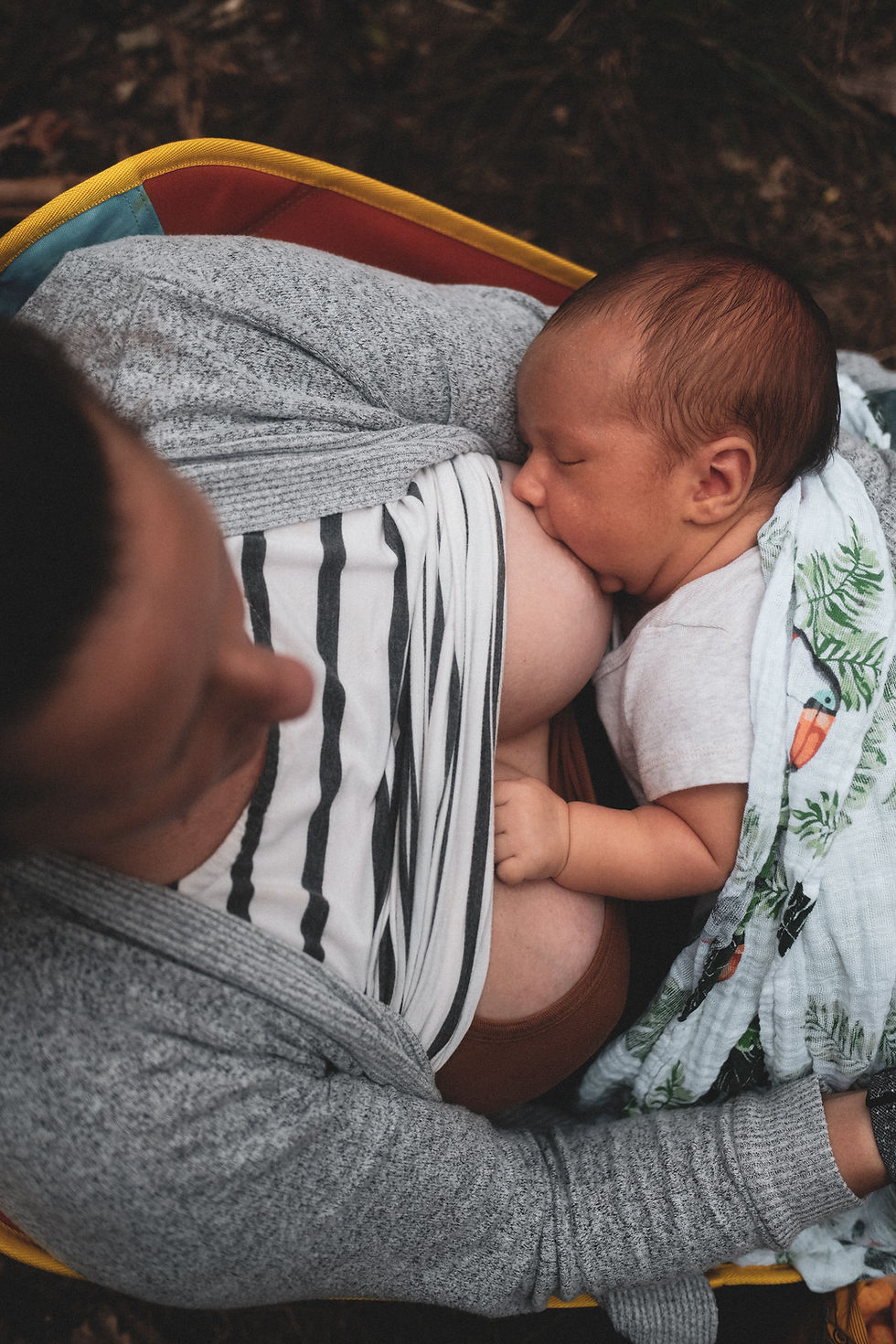
Proximity supports breastfeeding, babies cue earlier, and milk supply often benefits from frequent contact.
Lower stress levels from reduced crying and easier soothing.
Practical Benefits
Hands-free movement.
Ability to care for older siblings.
Easier outings without navigating prams.
Encourages confidence, you learn your baby’s cues quickly.
Babies tend to be far more settled and cry less
Many parents describe feeling calmer and more capable when babywearing becomes part of daily life.
Stretchy Wrap vs Structured Carrier
Stretchy Wrap (Best for the Fourth Trimester)
A stretchy wrap creates a snug, womb-like cocoon.
Moulds perfectly to a tiny newborn.
Feels soft and comforting.
Distributes weight evenly when baby is small.
Encourages that close, curled posture newborns love.
However, stretchy wraps have limits. As babies gain weight (often around 5–6 months, sometimes sooner), they can begin to sag. You may also find them slower to put on and adjust once baby becomes more alert and wriggly. Because of this, a second-hand, low-priced stretchy wrap is often a very sensible option. Although they’re marketed for extended use, many parents switch to something quicker and more supportive once baby is bigger and no longer needs that womb-like snugness.
Structured Carrier (Better Beyond the Fourth Trimester)
A structured carrier (sometimes called a soft structured carrier or buckle carrier):
Clips on quickly.
Offers firmer support.
Distributes weight more effectively as baby grows.
Allows longer, more comfortable carries.

Once baby is heavier and wants to look around more, a structured carrier becomes far more practical. It’s faster to put on and off, especially when you're out and about. For many families, this becomes the everyday workhorse. There are so many carriers on the market, some of them very expensive. I highly recommend seeking out your local 'sling library' to rent and trial a range of carriers to hep you decide which one suits your family best.
In short:
Stretchy wrap = beautiful for newborn cocooning.
Structured carrier = better long-term support and convenience.
Safety First: Follow T.I.C.K.S.
Safe babywearing is essential. A helpful way to remember the key principles is the T.I.C.K.S. guideline:
T — Tight
Your sling should be tight enough to hug baby close to you. Loose fabric can allow baby to slump, which may compromise their airway.
I — In View at All Times
You should always be able to see your baby’s face without moving fabric aside. Their face should never be covered.
C — Close Enough to Kiss
If you tilt your head forward, you should be able to kiss the top of your baby’s head. This usually means baby is worn high on your chest.
K — Keep Chin Off Chest
There should always be space under baby’s chin — at least a finger’s width. A chin pressed to chest can restrict breathing.
S — Supported Back
Baby’s back should be well supported in their natural position. They should not slump or fold inward.
Additional Considerations
Ensure baby is in an ergonomic “M” hip position.
Follow manufacturer weight guidelines.
Avoid carrying while drowsy.
Take extra care if baby was premature or has respiratory or hip concerns — consult a healthcare professional or trained babywearing consultant if unsure.
If you have significant back issues, balance difficulties, or medical conditions affecting safe carrying, seek professional advice first.
Avoid:
Carrying in positions where baby slumps.
Using carriers not designed for newborns without proper inserts or adjustments.
The Bigger Picture
Babywearing isn’t about doing more, it’s about responding to what your newborn’s biology already expects.
For a tiny human who has spent nine months inside you, being placed alone on a flat surface can feel like separation. Being held close feels like survival.
And for you? It can mean calmer days, easier feeding, more mobility, and a deeper sense of connection.
In a world that often pressures parents toward independence early, babywearing gently reminds us of something ancient and simple: Newborns don’t need less holding. They need safe, supported closeness — and a sling can help you give exactly that.


Comments